Keeping Your Baby Safe from Seasonal Illnesses in the Summer
May 20th, 2026 | New Mothers
Summer is often associated with joyous outdoor adventures, sunshine, and carefree days. However, for new parents, it can also bring a heightened sense of anxiety as they navigate the unique health challenges presented by the season. While winter often dominates conversations about colds and flu, summer isn’t immune to illness. It presents different threats – from heat exhaustion and dehydration to exposure to new germs and insect-borne diseases. Understanding these risks and taking proactive steps to protect your baby is crucial for ensuring a happy and healthy summer. This guide will provide you with key information and practical advice to keep your little one safe and thriving.
Understanding the Summer Health Risks for Babies
Babies are particularly vulnerable to seasonal illnesses for several reasons. Their immune systems are still developing, making them less equipped to fight off infections. They also have a higher surface area-to-body weight ratio than adults, meaning they lose heat more quickly. This makes them susceptible to heat exhaustion and dehydration, particularly when exposed to high temperatures and direct sunlight. Furthermore, summer brings changes in mosquito and tick populations, increasing the risk of insect-borne diseases like Lyme disease or West Nile virus.
Common Summer Illnesses to Watch Out For:
- Heat Exhaustion: Symptoms include excessive sweating, weakness, dizziness, headache, and nausea. It’s vital to recognize these signs early and take immediate action to cool your baby down.
- Dehydration: Babies lose fluids rapidly through sweat and urination. It’s important to monitor their urine output and offer frequent hydration.
- Viral Infections: Summer brings a resurgence of common viruses like hand, foot, and mouth disease, roseola, and enteroviruses.
- Skin Infections: Increased sun exposure can lead to sunburns and skin infections.
- Insect Bites and Stings: Mosquitoes and ticks can transmit diseases, and bee stings can cause allergic reactions.
Proactive Measures for Baby Summer Health
Preventing illness starts with proactive measures. Creating a safe and comfortable environment for your baby is the first line of defense.
Creating a Cool & Comfortable Environment
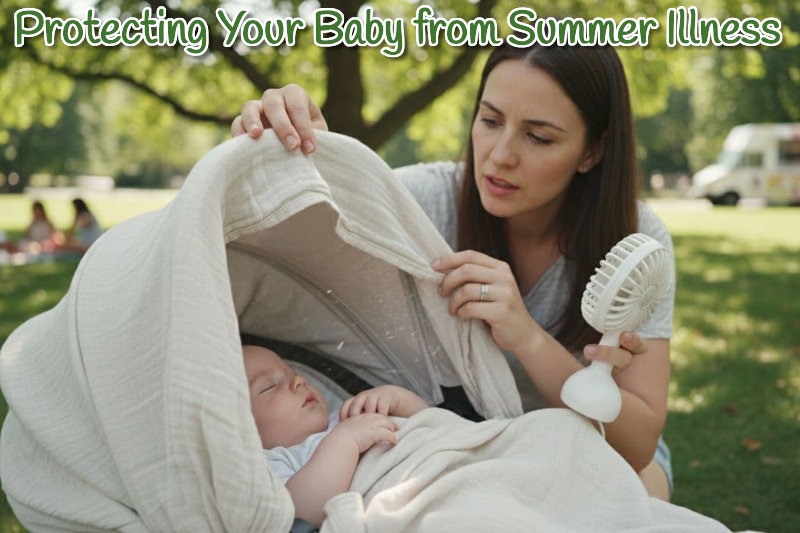
- Shade is Key: Minimize direct sun exposure, especially during peak hours (10 am – 4 pm). Use shade sails, umbrellas, or seek shade whenever possible.
- Light Clothing: Dress your baby in light-colored, loose-fitting clothing. Natural fabrics like cotton are ideal.
- Keep the Home Cool: Maintain a comfortable indoor temperature. Use fans and air conditioning if possible.
- Avoid Overheating: Limit strenuous activities that can cause your baby to overheat.
Hygiene and Germ Prevention
- Frequent Handwashing: This remains the single most effective way to prevent the spread of germs. Wash your hands frequently, especially after changing diapers, handling your baby, or coming into contact with surfaces.
- Clean Surfaces: Regularly disinfect frequently touched surfaces like toys, countertops, and changing tables.
- Limit Exposure to Crowds: Minimize your baby’s exposure to large crowds, particularly during peak hours.
- Proper Diapering Practices: Always wash your hands thoroughly after changing diapers.
Key Takeaways and Ongoing Monitoring
Keeping your baby safe from seasonal illnesses in the summer requires a proactive and vigilant approach. By understanding the specific risks, implementing preventative measures, and knowing how to provide targeted relief with products like Three Lollies lozenges, you can help your little one enjoy a healthy and happy summer.
Don’t forget:
- Stay Hydrated: Offer frequent sips of breast milk or formula.
- Monitor Closely: Pay close attention to your baby’s symptoms – changes in behavior, appetite, or skin condition.
- Consult Your Pediatrician: If you have any concerns about your baby’s health, don’t hesitate to contact your pediatrician for guidance.
Recent Posts
- Back-to-School Lunchbox Hacks – Keeping Little Ones Comfortable and Fed
- Cold & Flu Season Prep: A Proactive Approach to Wellness
- September’s Seasonal Bounty: A Potential Ally Against Morning Sickness
- Motion Sickness on School Drop-Off? A Guide to Calm Journeys
- The Perfect Post-Feeding Cool Down: How Lozenges Can Help
Categories
- All-Natural (4)
- Blog (46)
- Cancer (95)
- Diet (15)
- Holidays (31)
- Lifestyle (84)
- Motion Sickness (48)
- Nausea (134)
- New Mothers (54)
- Oncology Testimonials (3)
- Prebiotics (1)
- Preggie Products (11)
- Preggie Testimonial (24)
- Pregnancy (169)
- Queasy Products (8)
- Queasy Testimonial (17)