Travel Anxiety & Motion Sickness: Preparing for August Road Trips
August 1st, 2026 | Motion Sickness
August is a time of vibrant landscapes, family gatherings, and the irresistible allure of open roads. For many, it signals the start of eagerly anticipated road trips – a chance to reconnect with loved ones and explore new horizons. However, for a significant number of travelers, this excitement can quickly morph into anxiety, often exacerbated by the very thing that makes road trips so appealing: motion sickness. The combination of unfamiliar surroundings, long drives, and the subtle disorientation caused by movement can trigger intense feelings of stress, worry, and nausea. Understanding the root causes of travel anxiety and motion sickness is the first step towards enjoying a smoother, more comfortable journey. This article will provide practical strategies, focusing on how to minimize distress and maximize your enjoyment throughout your August adventures.
Understanding the Roots of Travel Anxiety
Travel anxiety isn’t just about physical discomfort; it’s often rooted in deeper psychological factors. Before we dive into remedies for motion sickness, let’s acknowledge what fuels the feeling. Several elements can contribute to a heightened sense of worry when travelling – from pre-trip jitters and fear of the unknown, to concerns about control, safety, and potential disruptions to routine.
- Fear of Loss of Control: Road trips, particularly long ones, inherently involve relinquishing some control over your immediate environment. This can be unsettling for individuals who thrive on predictability and structure.
- Social Anxiety: Traveling with others, especially unfamiliar groups, can trigger social anxiety – the worry about judgment or awkward interactions.
- Past Negative Experiences: Previous negative travel experiences (even seemingly minor ones) can create a heightened sense of apprehension.
- Sensory Overload: The constant barrage of new sights, sounds, and smells can be overwhelming for some individuals, contributing to anxiety symptoms.
It’s important to acknowledge these underlying anxieties rather than dismissing them as simple “nervousness.” Recognizing the specific triggers will help you develop targeted coping mechanisms.
The Science Behind Motion Sickness: Why Does It Happen?
Motion sickness occurs when there’s a mismatch in sensory information your brain receives. Specifically, the inner ear (responsible for balance), the eyes (which see movement), and muscles/joints (sensing position) send conflicting signals to the brain. This confusion triggers a cascade of physiological responses – nausea, dizziness, sweating, increased heart rate – all designed to force the body to “correct” the perceived imbalance.
- Vestibular System Mismatch: The vestibular system is particularly sensitive to changes in movement. When the car’s movements don’t align with what your eyes are seeing (e.g., looking at a fixed point inside the vehicle), it creates sensory conflict.
- Visual-Vestibular Conflict: This is the most common cause of motion sickness. If you read, look at a phone, or engage in any activity that restricts eye movement while traveling, the visual input will clash with the inner ear’s perception of movement.
- Individual Susceptibility: Some people are simply more prone to motion sickness than others due to variations in their vestibular system sensitivity and how efficiently they process sensory information.
Practical Strategies for Minimizing Motion Sickness & Anxiety
Now, let’s move onto practical solutions! A multifaceted approach combining prevention strategies, proactive coping mechanisms, and specific tools can dramatically reduce the likelihood of motion sickness or travel anxiety disrupting your August road trip.
1. Pre-Trip Preparation: Setting Yourself Up for Success
Preparation is key to minimizing both anxiety and motion sickness symptoms. Start well in advance of your journey by taking these steps:
- Talk to Your Doctor: Discuss your concerns with your healthcare provider, especially if you are pregnant or have a history of migraines or anxiety. They can offer personalized advice and potentially prescribe medication for severe cases (consulting about anti-emetics).
- Choose Comfortable Clothing: Loose-fitting, breathable clothing will help you stay cool and comfortable, reducing overheating, a common trigger for anxiety and nausea.
- Pack Smartly: Organize your belongings to minimize stress during packing and unpacking. A well-organized vehicle reduces clutter and potential distractions.
2. During the Trip: Targeted Techniques & Tools
Once on the road, these techniques can provide immediate relief:
- Focus on the Horizon: Encourage passengers (and yourself) to look out the front window at a distant, stable point – the horizon is particularly effective as it provides a consistent visual reference.
- Eat Light Meals: Heavy or greasy foods can exacerbate nausea. Opt for bland snacks like crackers, toast, or dry bread. Avoid sugary drinks and strong smells.
- Stay Hydrated: Dehydration can worsen motion sickness symptoms. Drink plenty of water throughout your journey.
- Fresh Air: Open windows to increase ventilation and minimize stuffy air.
Queasy Wrist Band: Acupressure for Relief
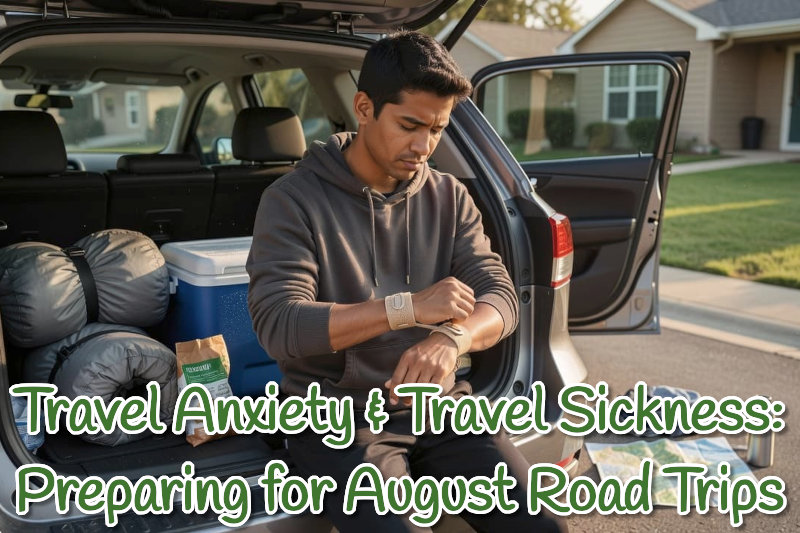
Amidst these preventative measures, it’s crucial to have a targeted tool ready to deploy when symptoms start to emerge. The Queasy Wrist Band is an acupressure band designed to provide immediate relief from motion sickness and travel anxiety. Utilizing traditional Chinese medicine principles, the Queasy Wrist Band applies gentle, consistent pressure to key acupressure points on the wrist – specifically P6 (Neiguan) – known for its calming and anti-nausea effects.
- How it Works: The band’s design mimics the natural therapeutic effect of manual acupressure by stimulating these meridian points without requiring you to actively manipulate them. This stimulation can help calm the nervous system, reduce nausea signals, and promote relaxation.
- Comfort & Convenience: The Queasy Wrist Band is lightweight, adjustable, and discreet – easily worn under your sleeve or shirt for convenient access when needed. It’s a fantastic addition to any travel kit!
Conclusion: Enjoy Your August Road Trip with Confidence
August road trips hold the promise of unforgettable experiences, but it’s perfectly normal to encounter moments of anxiety and motion sickness along the way. By understanding the underlying causes of these symptoms and implementing proactive strategies – from careful preparation to utilizing tools like the Queasy Wrist Band – you can significantly reduce your distress and increase your enjoyment of your journey. Don’t let fear hold you back; embrace the adventure with confidence and create lasting memories!
Recent Posts
- Self-Care Rituals for New Moms During the Busy Holiday Season
- Pumpkin Spice Hydration: Embrace Fall’s Warmth & Wellness
- Autumn Nausea: A Chemotherapy Patient’s Survival Guide
- Finding Serenity on the Road: Autumn Flavors to Calm Travel Sickness
- The Ultimate Hydration Guide For Transitioning Into Fall
Categories
- All-Natural (4)
- Blog (46)
- Cancer (97)
- Diet (15)
- Holidays (32)
- Lifestyle (87)
- Motion Sickness (48)
- Nausea (136)
- New Mothers (55)
- Oncology Testimonials (3)
- Prebiotics (1)
- Preggie Products (11)
- Preggie Testimonial (24)
- Pregnancy (169)
- Queasy Products (8)
- Queasy Testimonial (17)